Every job below is one we do ourselves across Madera.
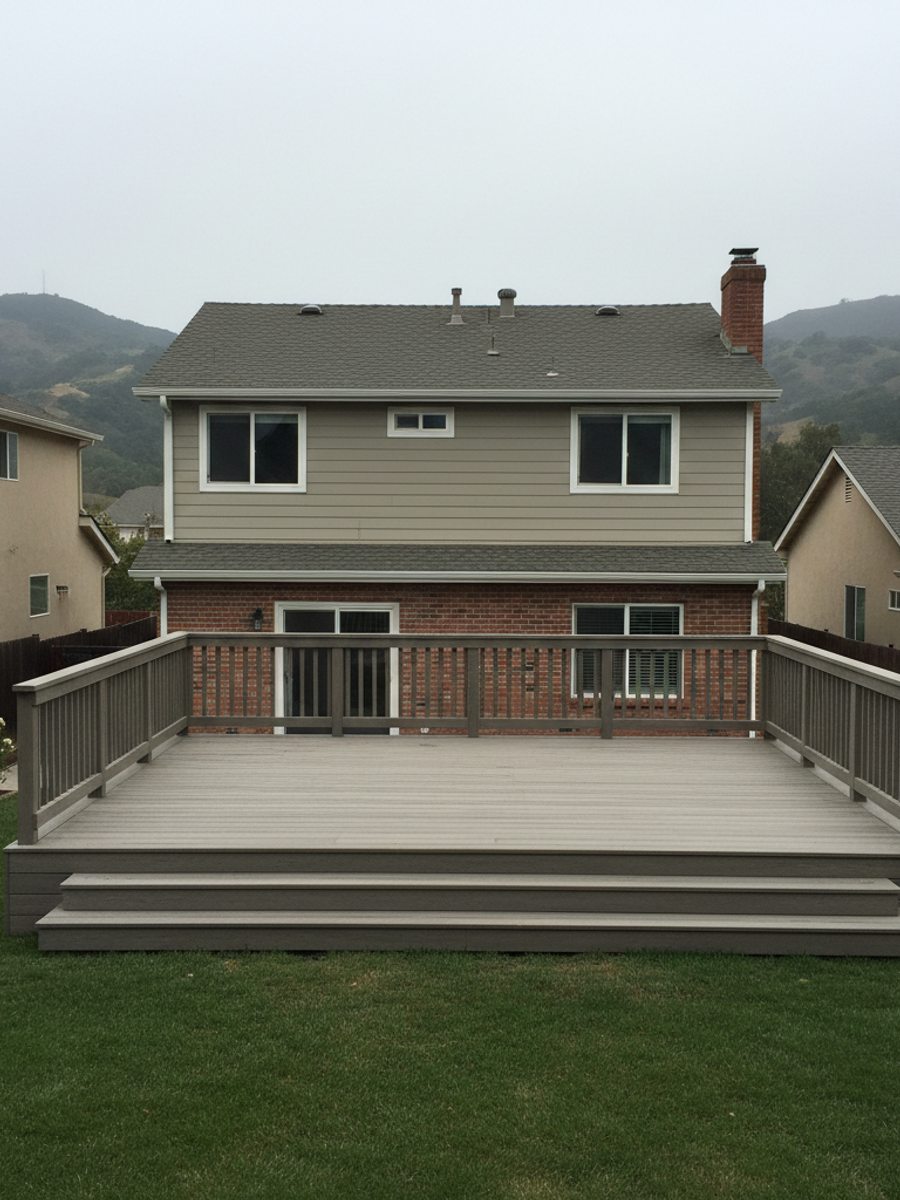
We build new decks from the footings up, sizing joists and beams to the actual span and load instead of eyeballing it. Ledger boards get flashed properly where they meet your house, since that's the spot most decks start rotting from the inside. We'll walk you through wood versus composite before we pour a single footing.
A deck that bounces, a rail that wiggles, or boards that have gone soft usually points to something underneath, not just the surface. We check joist hangers, post bases and the ledger connection before we replace a single board. Sometimes a repair is a few sistered joists, sometimes the whole frame needs to come off.
Madera sun checks and grays untreated wood fast, sometimes within a single season. We pressure wash first, let the deck dry out fully, then apply a semi-transparent or solid stain depending on the wood and how much sun it gets. Plan on recoating every one to two years if you want it to keep looking new.
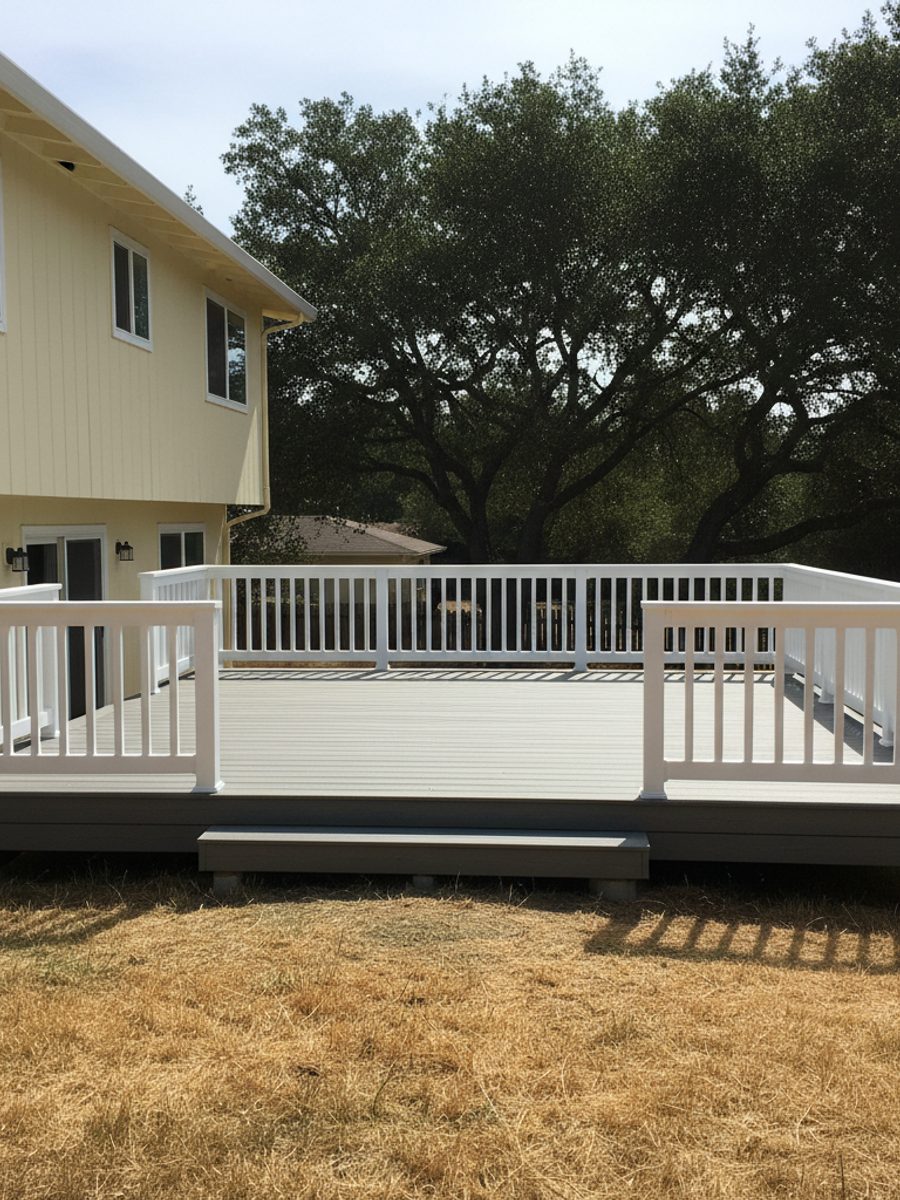
Composite boards like Trex or TimberTech don't need staining and won't splinter, but they still sit on a wood or steel frame that has to be built right underneath. We use hidden fastener systems for a clean look and leave the gapping composite needs to handle heat expansion.
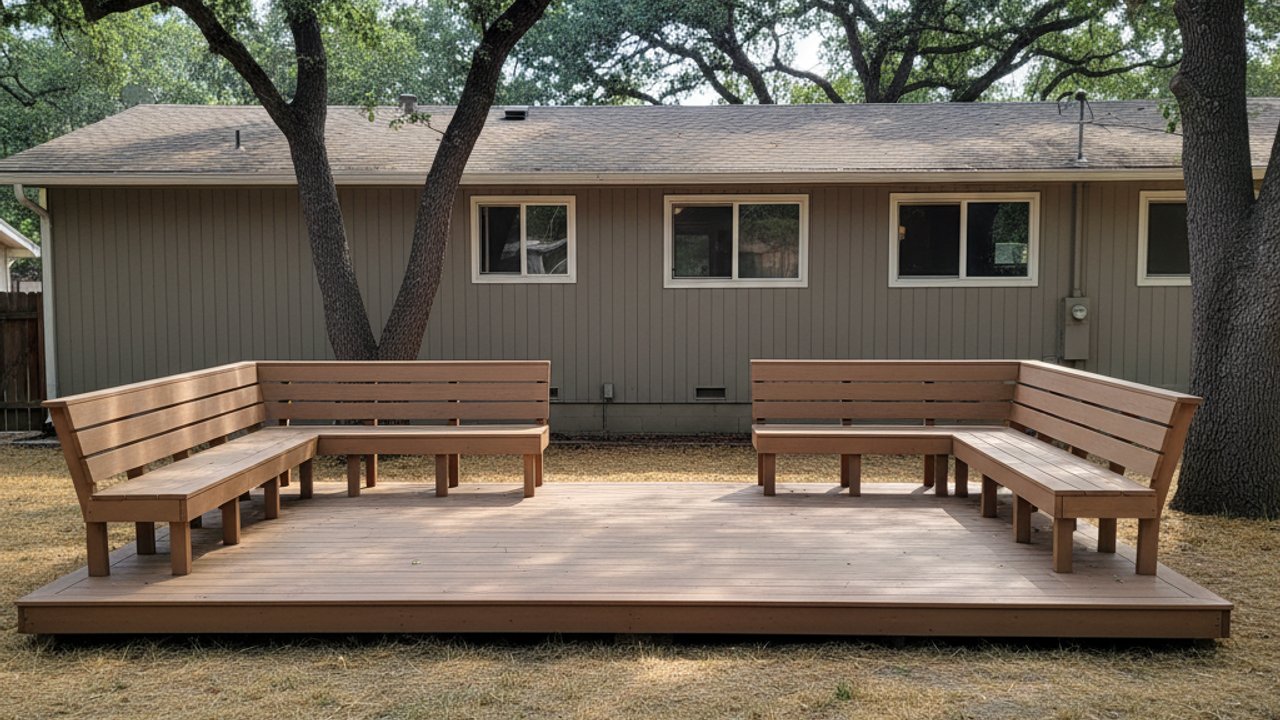
Multi-level decks, built-in benches, lighting run through the railing, whatever the yard calls for, we design around how you'll actually use the space. We draw it out and price it before any lumber gets ordered.
Railings get built to the height and baluster spacing code requires, usually 36 to 42 inches with no gap wider than 4 inches. Wood, metal and cable rail all attach differently to the deck frame, and we size the posts to whichever one you pick.
When boards have cupped, split or gone soft in spots but the frame underneath is still solid, we pull and replace just those boards. We match spacing and profile to the rest of the deck so it doesn't look patched.
Rot at the ledger, a post base that's rusted through, or a footing that's heaved from clay soil movement, this is the work that decides whether a deck lasts another twenty years or five. We sister joists, replace post bases and repour footings where the old ones weren't set deep enough.
Stringers get sized for the actual rise and run, not a standard box kit, and every step lands on its own footing or landing pad. Steep stairs and mismatched rise heights are the most common way people trip on a deck.
A pergola attached to an existing deck needs its own posts and footings, it can't just hang off deck framing that wasn't built to carry that load. We size the structure separately and tie it in clean.
Four steps, and no surprises in any of them.
You tell us what you want doing, we look at what is actually there, and we ask the awkward questions early.
In writing, itemised, free. If something might add cost later we flag it now rather than at the end.
Same crew throughout. We cover your floors, keep the dust down and tidy up before we leave each day.
You point out anything you are not happy with and we fix it before the invoice, not after.
This is the ground we build on, from Madera out through the valley.
Questions that come up once a project actually gets moving.
Describe the problem and we will tell you what it probably is. No obligation.